How to Reduce Cart Abandonment for D2C Brands in 2026
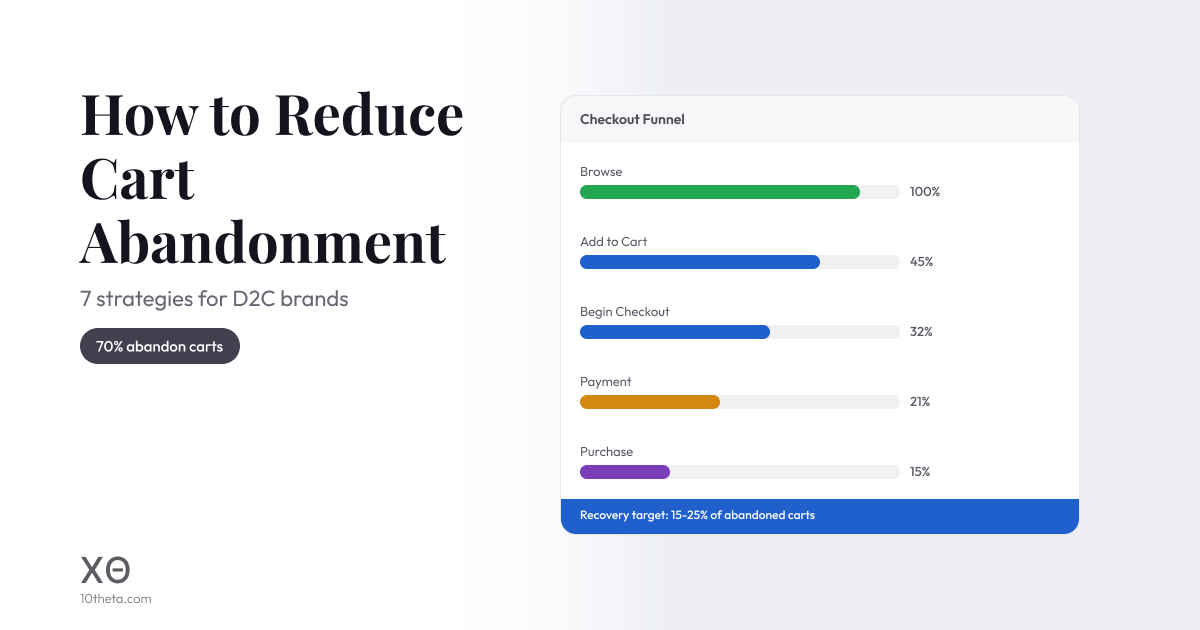
70% of online shopping carts are abandoned before purchase, according to the Baymard Institute. For Indian D2C brands, this translates to over ₹1 crore in lost revenue per month for every ₹50 lakh in sales - but proven recovery strategies can reclaim 15-25% of abandoned carts.
Cart abandonment remains the single biggest leak in any D2C brand's revenue funnel. Despite advancements in eCommerce technology, the average cart abandonment rate still hovers around 70%, meaning seven out of ten shoppers who add a product to their cart leave without completing the purchase. For D2C brands operating on thin margins, that is an enormous amount of revenue left on the table every single day.
The good news: most abandonment is preventable. Below are seven proven strategies that leading D2C brands are using in 2026 to recover lost carts and dramatically improve checkout conversion rates.
Why D2C Brands Lose 70% of Carts
Before diving into solutions, it helps to understand why shoppers abandon. The most common reasons are unexpected shipping costs revealed at checkout, mandatory account creation, a checkout process that feels too long or complicated, lack of trust signals, and limited payment options. For Indian D2C brands specifically, the absence of COD or UPI payment options can cause significant drop-off. Each of these friction points represents an opportunity to intervene and recover the sale.
The compounding effect is what makes this painful. A brand doing Rs 50 lakh in monthly revenue with a 70% abandonment rate is effectively watching Rs 1.16 crore in potential revenue disappear every month. Even reducing abandonment by 10 percentage points can translate to a 30-35% revenue increase.
1. WhatsApp Cart Recovery
Email open rates for cart recovery have dropped below 15% in most markets. WhatsApp, on the other hand, consistently delivers 85-95% open rates and 25-35% click-through rates for Indian D2C brands. The channel is personal, immediate, and already where your customers spend their time.
The most effective WhatsApp recovery sequences follow a three-message cadence: a gentle reminder within 30 minutes of abandonment, a message with a small incentive (free shipping or 5% off) after 4 hours, and a final urgency-driven message at the 24-hour mark. Brands using automated WhatsApp recovery through platforms integrated with their store see recovery rates of 15-25%, compared to just 3-5% for email alone. Pairing this with Clareθ enables the AI agent to handle customer queries within the WhatsApp conversation itself, answering product questions and resolving objections in real time.
2. Smart Checkout Optimization with Payθ
A clunky checkout experience is the fastest way to lose a ready-to-buy customer. Every additional form field, every unnecessary page load, and every moment of confusion adds to the probability of abandonment. Smart checkout means reducing the number of steps, auto-filling known customer data, and presenting the right payment methods at the right time.
Payθ addresses this by intelligently ordering payment options based on each customer's past behavior and regional preferences. If a returning customer always pays via UPI, UPI is shown first. If a first-time visitor is browsing from a tier-2 city, COD is surfaced prominently alongside a prepaid discount nudge. This dynamic checkout optimization alone can improve payment success rates by 15-20%, directly reducing abandonment at the final, most critical step of the funnel.
Engageθ3. Progress Bars and Incentives with Cartθ
Shoppers respond powerfully to visible progress toward a reward. A progress bar in the cart showing how close they are to unlocking free shipping, a free gift, or a percentage discount creates a psychological pull that is hard to resist. It transforms the cart from a passive holding area into an active engagement tool.
Cartθ makes this effortless for D2C brands. It automatically displays tiered incentives: "Add Rs 299 more for free shipping" or "You're Rs 150 away from a free sample." These dynamic nudges increase average order value by 18-25% while simultaneously reducing abandonment, because shoppers who are actively working toward a reward are far less likely to leave. Cartθ also supports product recommendations directly within the cart drawer, making upselling and cross-selling a natural part of the shopping flow.
4. Exit-Intent Offers
Exit-intent detection identifies the moment a shopper is about to leave your site, whether by moving their cursor toward the browser's close button on desktop or switching tabs on mobile. This is your last chance to retain them, and a well-timed offer at this moment can recover 5-10% of abandoning visitors.
The key is to make the offer feel exclusive and time-sensitive rather than desperate. "Wait, here's 10% off just for you, valid for the next 15 minutes" performs significantly better than a generic "Don't go!" popup. The offer should also be relevant to what is in the cart. For high-value carts, consider offering free express shipping rather than a discount to protect your margins. Test different creatives and copy regularly, because exit-intent effectiveness decays as returning visitors become accustomed to seeing the same offer.
5. Guest Checkout
Forcing account creation before purchase is one of the oldest and most persistent conversion killers in eCommerce. Studies consistently show that 24-26% of shoppers abandon specifically because they were asked to create an account. For D2C brands, the temptation to capture customer data upfront is understandable but counterproductive when it prevents the sale entirely.
Enable guest checkout and collect the data post-purchase instead. After the order is placed, prompt the customer to save their details for faster future checkouts. Most will agree because they now have a reason to return. You can also use Secureθ Identityθ to build rich customer profiles from purchase behavior, browsing patterns, and engagement data without requiring a formal account creation step. The result is the same customer intelligence with none of the checkout friction.
6. Trust Signals at Checkout
The checkout page is where buyer anxiety peaks. Shoppers are about to hand over their payment information and commit to a purchase, and any doubt about security, returns, or product quality can cause them to hesitate and ultimately leave. Trust signals placed strategically on the checkout page reduce this anxiety measurably.
The most effective trust signals for Indian D2C brands include: secure payment badges (SSL, PCI compliance icons), a clearly visible return and exchange policy summary, real customer reviews or a star rating near the order summary, estimated delivery dates with courier partner logos, and a customer support contact number or WhatsApp link. Brands that add a concise "100% Secure Checkout" banner with recognizable payment logos above the payment button see a 5-8% improvement in checkout completion rates. These are small additions that require minimal development effort but have outsized impact.
7. AI Personalization with Clareθ
Generic shopping experiences lead to generic results. When every visitor sees the same products, the same layout, and the same offers, abandonment rates stay stubbornly high. AI personalization changes this by tailoring the entire shopping journey to each individual visitor's preferences, behavior, and intent.
Clareθ, the AI-powered shopping agent from xθ, takes personalization beyond basic product recommendations. It understands shopper intent in real time, answering questions, suggesting complementary products, and resolving purchase hesitations through natural conversation. Clareθ can proactively offer size guidance to a shopper browsing apparel, suggest a bundle deal to someone buying a skincare set, or provide ingredient details to a health-conscious buyer. By addressing the specific reasons each individual shopper might abandon, Clareθ reduces cart abandonment by 20-30% while also increasing average order value. Learn more about how AI personalization transforms D2C eCommerce.
Sources & References
- Baymard Institute - Cart Abandonment Rate Statistics (2024), 70.19% average abandonment rate across 49 studies
- Statista - Shopping cart abandonment rate worldwide 2006-2024
- Meta for Business - WhatsApp Business messaging best practices for eCommerce recovery campaigns
Related Articles
- D2C Checkout Optimization: From Cart to Payment (Guide)
- WhatsApp Commerce for D2C Brands: Complete Guide
- One-Click Checkout Comparison: GoKwik vs Shopflo vs Shiprocket vs xθ
- How to Reduce RTO in eCommerce India
- AI Voice Bot for D2C: Cart Recovery, COD Confirmation & Beyond
- How to Increase AOV for D2C Brands in India
70% of your carts are abandoned right now.
xθ recovers lost carts with AI-timed WhatsApp reminders, smart urgency triggers, and one-click checkout - not just another email flow.
See How xθ Recovers Carts or calculate your revenue leaks for free ›